Roof hatches are often overlooked in commercial building design, yet they play a critical role in ensuring safe rooftop access, supporting maintenance operations and meeting building code requirements. Whether you're designing a new facility or retrofitting an existing structure, specifying the right roof hatch can impact everything from worker safety to energy efficiency.
In this article, we’ll explore why roof hatches matter, what codes govern their use and how Babcock-Davis roof hatches help architects, contractors and specifiers meet performance and compliance goals.
What Is a Roof Hatch?
A roof hatch is a building access product that offer a safe and efficient way to reach the roof. It typically consists of:
- A hinged lid
- An insulated curb
- Safety hardware (e.g., gas springs, locks hold open arms)
- Optional accessories like ladder-up posts or safety rails
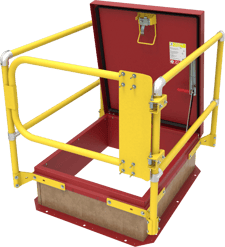
Roof hatches are commonly installed above stairwells, mechanical rooms or service corridors to allow maintenance personnel, inspectors and emergency responders to access rooftop equipment.
Why Roof Hatches Are Essential
Safe Rooftop Access
Commercial buildings often house HVAC systems, solar panels, antennas and other equipment on the roof. Roof hatches provide:
- Secure access for maintenance crews
- Reduced reliance on exterior ladders or scaffolding
When paired with internal ladders or ship stairs, roof hatches offer a safer and more efficient way to reach the roof.
Fall Protection and Worker Safety
Open roof hatches can pose fall hazards. OSHA regulations require fall protection for openings of 4 feet or more above the below level. Babcock-Davis offers integrated safety solutions such as:
These accessories help contractors meet OSHA and IBC requirements while protecting workers during rooftop transitions.
Code Compliance
Roof hatches must comply with several building codes and standards:
Babcock-Davis roof hatches are designed to meet or exceed these standards, with thermally-broken options available.
Common Applications
Roof hatches are used across a wide range of commercial building types:
- Office buildings – For HVAC and solar access
- Hospitals – Emergency egress and equipment maintenance
- Schools and universities – Safe access for facility teams
- Industrial facilities – Frequent rooftop inspections
- Multifamily housing – Rooftop maintenance
Each application may require different hatch sizes, materials and safety features.
Choosing the Right Roof Hatch
Size and Configuration
Standard roof hatch sizes include:
- 36" x 30" – For ladder access
- 36" x 96" – For stair access
- Custom sizes – Available for unique layouts
Choose based on the type of access (ladder vs. stair) and clearance requirements.
Material Selection
Babcock-Davis offers all three materials, with optional powder coating for aesthetic or environmental needs.
- Galvanized steel – Durable and cost-effective
- Aluminum – Lightweight and corrosion-resistant
- Stainless steel – Ideal for harsh environments
Thermal Performance
Energy codes require roof hatches to meet minimum insulation standards. Look for:
- Thermally-broken frames
- Insulated lids and curbs
- High R-value ratings
Explore roof hatches from Babcock-Davis to support IECC and ASHRAE compliance.
Installation Best Practices
Proper installation ensures long-term performance and code compliance. Key tips:
- Verify curb dimensions and alignment with interior access systems
- Seal and flash the curb according to roofing manufacturer guidelines
- Install safety accessories before final inspection
- Test lid operation and locking mechanisms
Babcock-Davis provides Installation support to contractors and installers.
Maintenance and Inspection
Roof hatches require periodic inspection to ensure safety and functionality:
- Check hinges, springs and seals
- Inspect safety rails and ladder posts
- Test manual and automatic opening mechanisms
- Verify thermal insulation integrity
Include roof hatch maintenance in your building’s fire safety and access plan.
Why Choose Babcock-Davis Roof Hatches?
Babcock-Davis is a trusted manufacturer of commercial building products, offering:
- Wide range of roof hatch models
- Thermally broken and insulated options
- Integrated safety systems
- Custom sizes and finishes
- Fast lead times through distributor partners
Explore our full line of roof hatches to find the right solution for your project.
FAQs
Contact a Babcock-Davis Expert
Need help selecting or specifying a roof hatch for your commercial project? Contact Babcock-Davis for expert guidance, product documentation and distributor support.